2025 Report for Sermon text-in questions
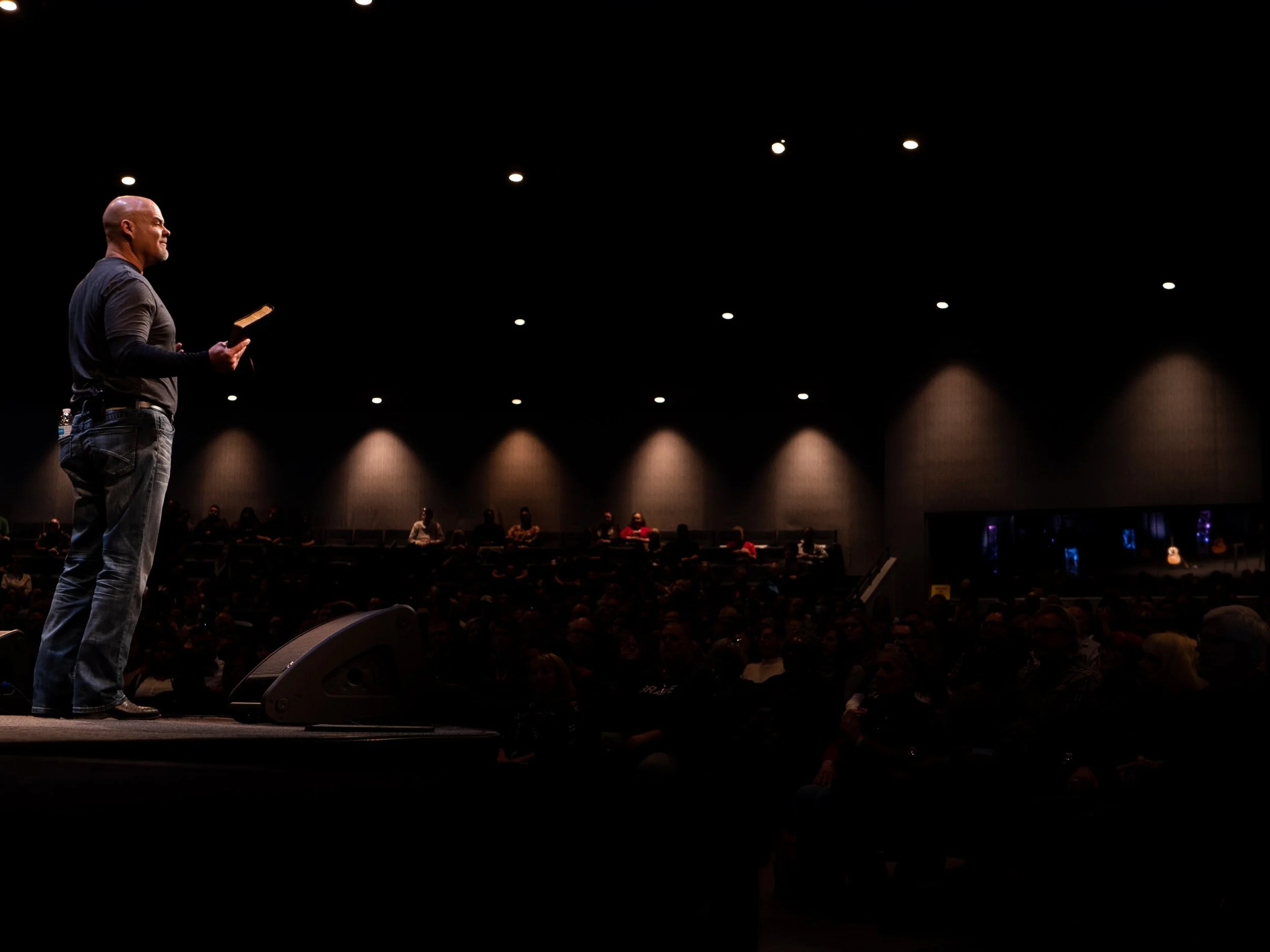
Every Sunday in 2025 I asked/allowed people to text me any question they have about the sermon. Actually, I’ve been doing this for years. Then at the end of the sermon I answer several of them live and on the spot. The rest are answered in full during my weekly podcast. I uploaded a video of the entire text stream to ChatGPT and asked for an analysis. Below is that report.
2025 Report For Real-Time Questions
One of the leadership practices we’ve leaned into as a church is live Q&A during preaching. People can text questions in real time while the message is being preached. It’s not a gimmick. It’s a culture-shaping decision.
Recently, I reviewed the full 2025 text stream of incoming questions. What I found wasn’t just interesting—it was leadership insight. This post shares the key statistics, the most common themes, and what it means for how we lead.
The 2025 Q&A Snapshot
- Total questions asked: 1,640
- Total questions askers: 450
- Average questions per week: 31
The Most Common Themes People Asked About
1) Biblical Interpretation
The most common questions weren’t political or trendy—they were biblical. People wanted to know what the text really means, how to interpret it faithfully, and how context matters.
2) Faith and Culture
Many questions lived at the intersection of conviction and complexity: How do Christians live faithfully in a world that pressures us morally, ideologically, and relationally? People weren’t asking whether to be faithful—they were asking how.
3) Salvation, Assurance, and Spiritual Security
Behind many questions was a quieter concern: “Am I okay with God?” The struggle for assurance is more common than most churches admit—and it often shows up in honest questions.
4) Sexual Ethics, Relationships, and Identity
Questions about marriage, divorce, sexuality, temptation, and identity surfaced consistently. These are rarely theoretical questions. They are usually personal, even when asked generally.
5) God’s Character in Suffering
Some questions came from pain: unanswered prayer, hardship, injustice, and disappointment. These questions are heavy—and sacred. They are often asked only where trust is strong.
6) Spiritual Warfare and the Unseen Realm
Questions about fear, temptation, demonic influence, and spiritual battle appeared throughout the year. People want balance: biblical clarity without sensationalism or dismissal.
7) Discernment and Decision-Making
“How do I know God’s will?” “What do I do when Scripture doesn’t give a simple answer?” These questions point to a need for wisdom frameworks, not just rules.
8) Church Practice, Leadership, and Trust
Some questions weren’t about doctrine but direction: why we do what we do, how decisions are made, and what is biblical versus preferential. These questions are often early indicators of health—curiosity before conflict.
What This Reveals About Church Health
1) Questions are a trust signal
People ask hard questions when they believe they will be heard, not shamed, and not punished for honesty. Silence isn’t always unity. Sometimes silence is fear.
2) This is not a “content stream”—it’s a permission stream
When a church learns that questions are allowed, people stop hiding. And when people stop hiding, discipleship gets real.
3) We are forming thinkers, not consumers
The stream reflects engagement, not apathy. Processing, not cynicism. Ownership, not rebellion. That kind of environment doesn’t happen by accident.
A Few Important Guardrails
- This does not mean every question can or should be answered fully in the moment.
- This does not mean questions automatically equal maturity—only that questions are welcomed.
- This does mean we would rather be a church where people ask hard questions than a church where people hide them.
What We’re Doing With This Going Forward
Data is only helpful if it leads to wise action. Here are a few commitments we’re leaning into:
- We’ll keep welcoming questions as a normal part of learning and growing.
- We’ll teach “how to think”—interpretation tools, biblical categories, and wisdom frameworks—not just conclusions.
- We’ll broaden the leadership voice by building a stronger teaching bench so healthy questions don’t bottleneck around one person.
- We’ll use these themes to shape future preaching, classes, and discipleship pathways.
Final Thought
If I had to summarize the entire year of questions in one sentence, it would be this:
This is a church learning how to think biblically in a complex world—and trusting its leaders enough to ask real questions while doing it.
I’m grateful for a congregation that leans in, asks honestly, and wants to grow. Let’s keep becoming the kind of church where truth is clear, grace is thick, and questions are safe.
10 Memorable Data Insights from the 2025 Q&A Stream
- The questions came consistently across the entire year, not in spikes around controversy, suggesting sustained engagement rather than momentary reaction.
- If every question took just one minute to answer, it would require over 27 straight hours of conversation.
- Nearly 40% of texts contained more than one question, suggesting people often led with a “safe” question before asking the deeper one.
- Very few questions were framed as attacks or “gotchas,” indicating curiosity and trust rather than suspicion or resistance.
- The majority of questions were forward-looking rather than reactive, focused on how to live faithfully rather than criticizing past decisions.
- Biblical interpretation questions outnumbered cultural or political ones, revealing a Scripture-first posture rather than an opinion-first culture.
- Question volume increased when sermons named complexity honestly, not when topics were sensational or inflammatory.
- Attendance measures who shows up; questions measure who is thinking, making Q&A one of the clearest engagement metrics available to leaders.
- Many of these questions are rarely voiced in most churches, not because people don’t have them, but because they don’t feel permission.
- Taken together, the volume and tone of questions function as a leadership dashboard, revealing trust levels, clarity gaps, and discipleship readiness in real time.